Best Glue to use on Polymer Clay?
When working with polymer clay, there are occasions when it's essential to securely bond pieces or attach baked items, such as a metal post for earrings. In this post, I will share my experiences with two popular glues used by clay artists and crafters. Keep in mind that there are many different approaches to this, and what works for me may not be the best fit for you. Consider this a starting point for your own experiments!
Let’s address the elephant in the room: polymer clay is a type of plastic, and there is no guaranteed method for bonding it to other materials. I’ve tested two popular adhesives:
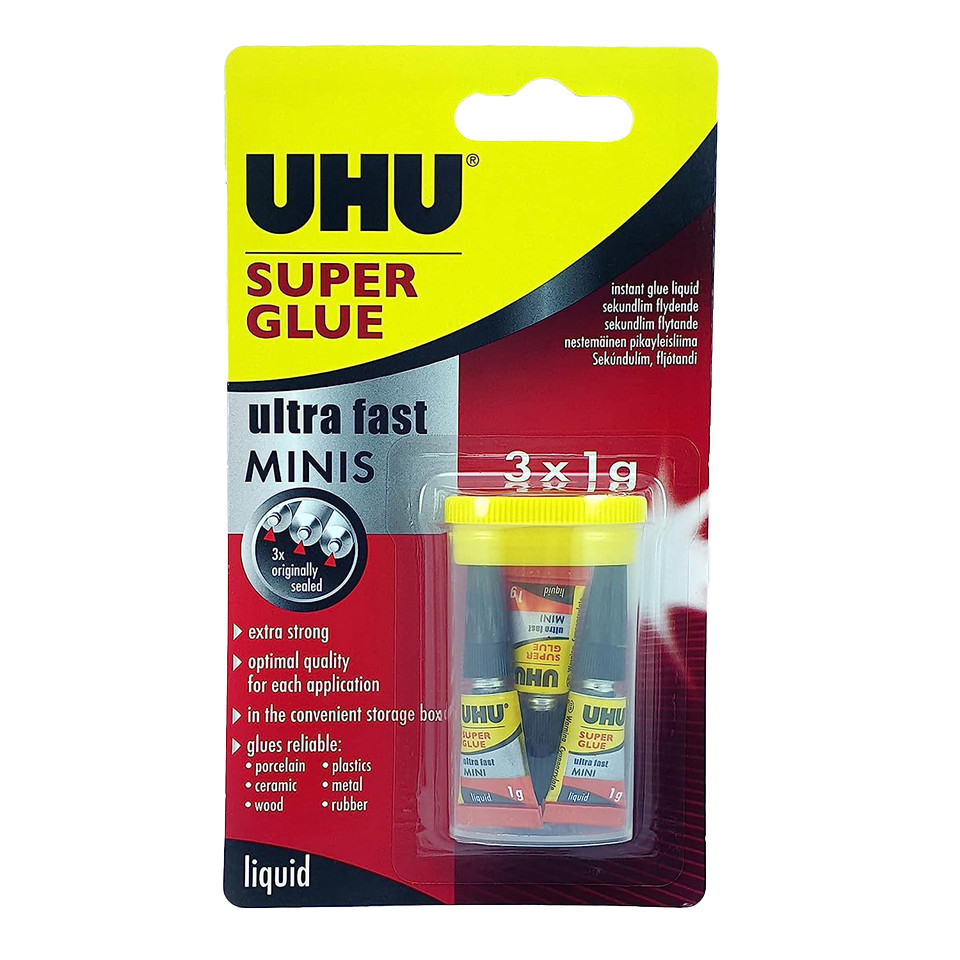
Super Glue: The classic household fix-it.
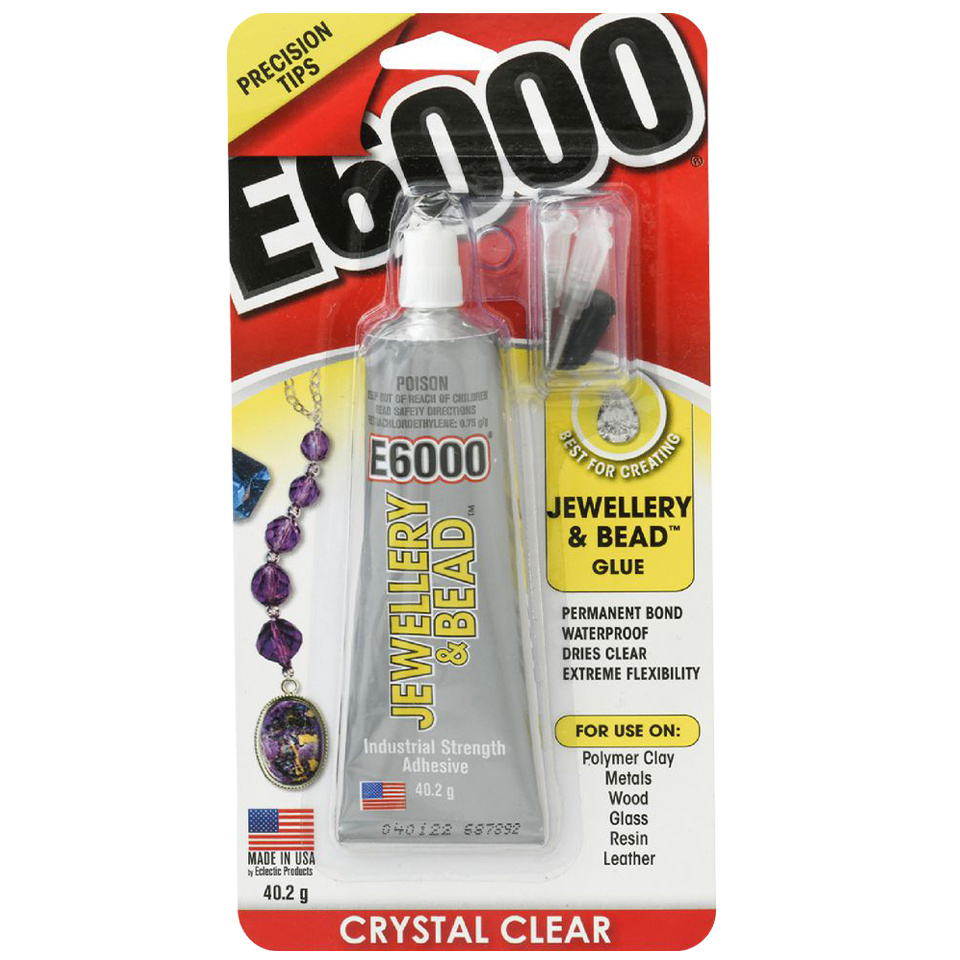
E6000: A favourite in the jewellery-making community.
Super Glue: The Good, the Bad, and the Messy
The main drawback is its unpredictability. A gentle squeeze can release too much glue, leading to messy situations where your fingers stick together or the glue accidentally spreads to unwanted surfaces. Its quick drying time can turn into a nightmare when you’re trying to clean up excess glue.
Pros:
Bonds quickly.
Dries clear.
Easy to get from the shops.
Cons:
Difficult to control the amount dispensed.
Dries fast, making adjustments tricky.
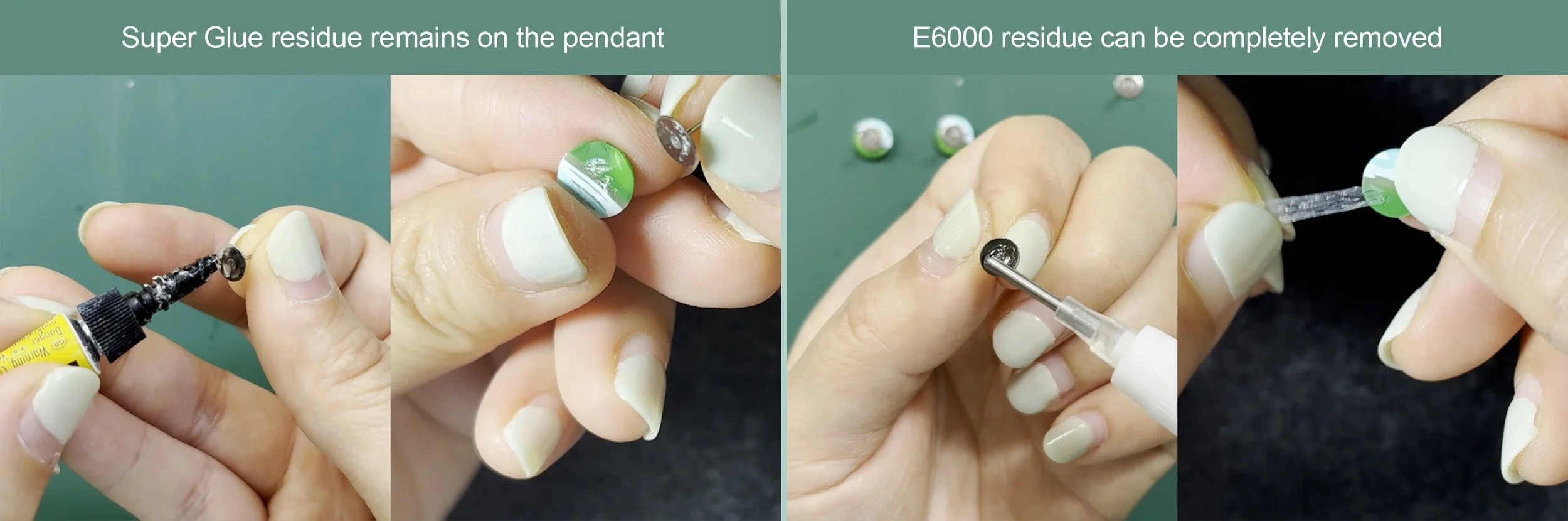
Can leave residue on clay if you try to remove/adjust it
Bond strength can be weak when the contact surface is small, such as when attaching a small metal post to a large clay pendant.
E6000: A Popular Choice
I did considerable research before trying E6000, which is widely recommended in online forums. To my excitement, the packaging lists polymer clay as one of its compatible surfaces. The narrow nozzle allows for precision application, and the gel-like texture gives you ample time to adjust your pieces. After pressing the surfaces together, the glue becomes tacky within a few minutes and usually takes 24 to 72 hours to fully cure, depending on humidity.
Pros:
Comes with a precision nozzle.
Gel-like consistency allows for adjustments.
Dries clear.
Peels off cleanly after drying.
Cons:
Bond strength can be weak when the contact surface is small, such as when attaching a small metal post to a large clay pendant.
Clogs in the nozzle. It is recommended to clean the nozzle after each use to prevent clogs.
Bondings can be broken without too much force.
My Testing Process
I tested both glues by attaching metal earring posts to polymer clay charms. I let the glue fully cure and then tried to pull the pieces apart.
Summary:
Conclusion: Beyond Glue
While both Super Glue and E6000 are decent options, for the most secure bonds, especially with metal, consider these alternatives:
Embed Metal: Design your clay pieces to incorporate metal findings before baking. For example, use head pins with the flat end embedded in the clay.
Screw Eye Pins: Screw eye pins into the clay before baking. They’re much more secure than glued-on options.
Physical bonds are generally more secure than adhesive bonds. Experiment to find what works best for your projects!
What are your favourite methods for bonding polymer clay? Share your tips in the comments below!