How to Avoid Fingerprints and Dust During Sculpting
Working with polymer clay often presents some inevitable challenges—namely, the pesky lint, dust, and black specks that seem to appear out of nowhere. Even when you manage to minimise dust and debris, fingerprints can still mar the smooth surface of your clay, making your finished piece look less professional—especially if you plan to sell your work. So, is there anything we can do to reduce these imperfections?
Before we begin, it’s important to acknowledge that we live in environments filled with tiny particles that settle on our work surfaces and clothing. These particles can become airborne whenever there’s air movement—such as when you turn your head, stand up, or move your arms. While it’s impossible to eliminate dust, we can certainly take steps to minimise its impact.
1. Clean Your Workspace and Tools Regularly
Start by thoroughly cleaning your work surface and tools. Use rubbing alcohol to wipe away dust, old stains, and clay residues. The choice of cleaning medium is crucial. I tried using a cotton pad, but it left behind lint from the cotton fibres. So far, my favourite is the kitchen paper towel. I find it extremely efficient at removing clay residues and dust. Dampen a small piece of paper towel with a bit of alcohol and wipe down your workspace and tools. Some artists recommend using baby wipes to clean hands during sculpting. Personally, I find that baby wipes tend to introduce more lint, especially if they’re made from materials like wood pulp. It’s best to experiment with different cleaning methods to see what works best for you.
2. Keep Your Hands Moisturised
The idea is that well-moisturised and smooth hands are less likely to attract dust and static electricity, which can cause lint to stick. Additionally, well-moisturised hands tend to develop fewer cracks and leave less noticeable fingerprints. However, simply applying hand cream before sculpting isn’t a magical solution. It might make your work surface greasy, especially if you are recording your process and aiming for a neat, professional appearance. This is particularly evident on glossy or reflective surfaces, where the cream may leave streaks or stains. Instead of being a quick fix, moisturising is more about building a long-term habit that will benefit creators over time. As creators, your hands are your most essential tool, so it’s important to take care of them.
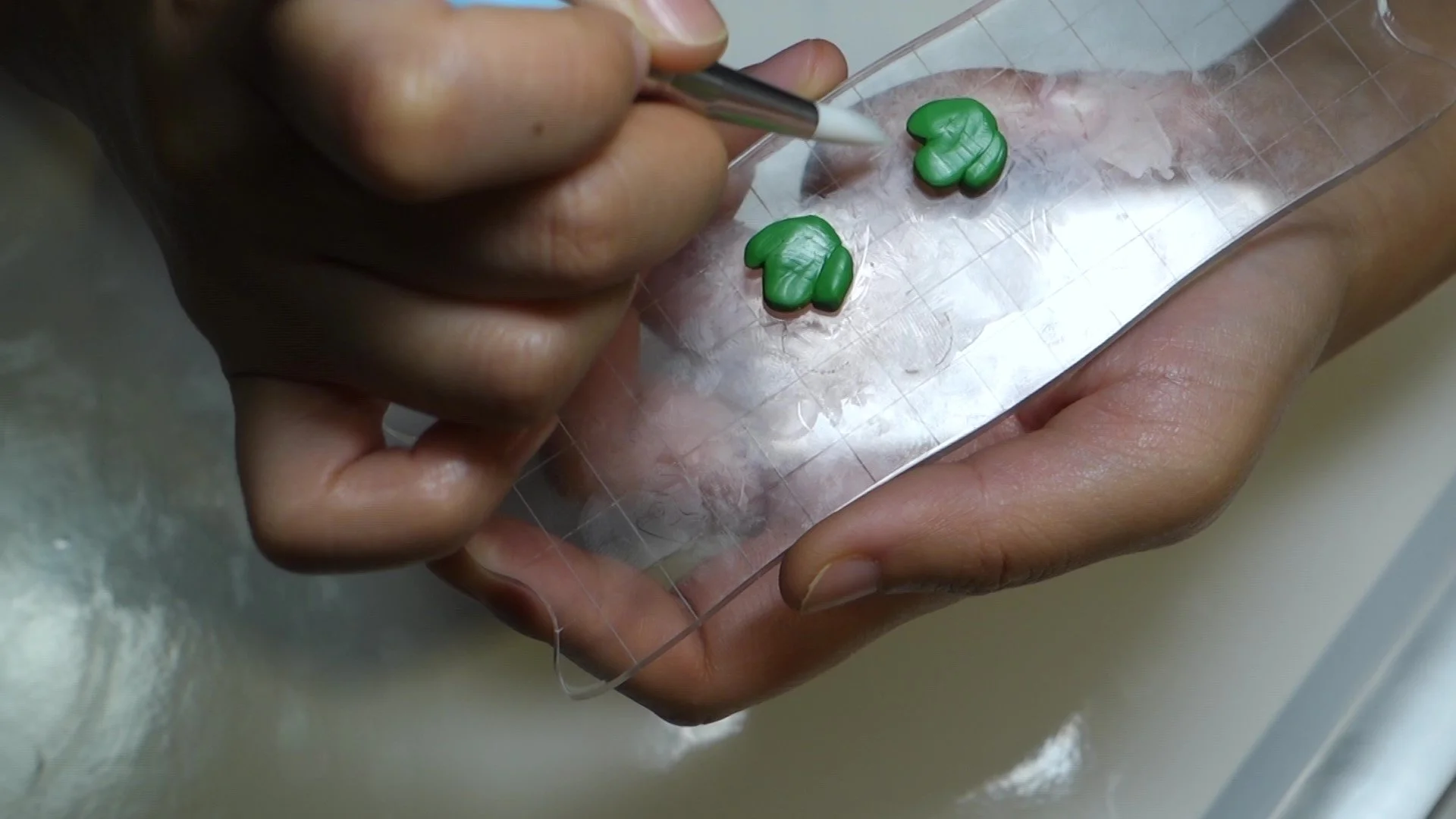
I applied hand cream before sculpting; you can see the stains on the acrylic board.
3. Use Gloves When Handling Clay
Wearing rubber gloves—such as those used for household chores or food preparation—can significantly prevent fingerprints and reduce dust transfer. If you opt for black gloves, it’s easier to spot dust and lint before they come into contact with your clay.
Choose thin, stretchy gloves for comfort during long sculpting sessions. Keep in mind that rubber gloves may leave small folds or impressions on the clay surface, even with perfectly fitted gloves. A good approach is to wear gloves during setup and initial rough modelling, then switch to bare hands for detailed work. This minimises dust and fingerprint issues during the most delicate stages.
4. Minimise Environmental Factors
Reducing dust in your workspace is also essential. Keep your desk tidy by removing unnecessary objects like books, papers, coasters, or photos. Consider wearing an old white cotton shirt to prevent loose fibres from contaminating your clay. Avoid clothing with loose threads or wool that can shed fibres. Run an air purifier when you're working, which could help capture small particles in the air, further reducing dust settling on your work.
Final Thoughts
These tips are starting points—there’s no one-size-fits-all solution. Each artist’s environment and workflow are unique, so it’s important to experiment and find what works best for you. With patience and practice, you’ll be able to create smoother, cleaner sculptures. Have fun creating, and I hope these suggestions help improve your sculpting experience!